

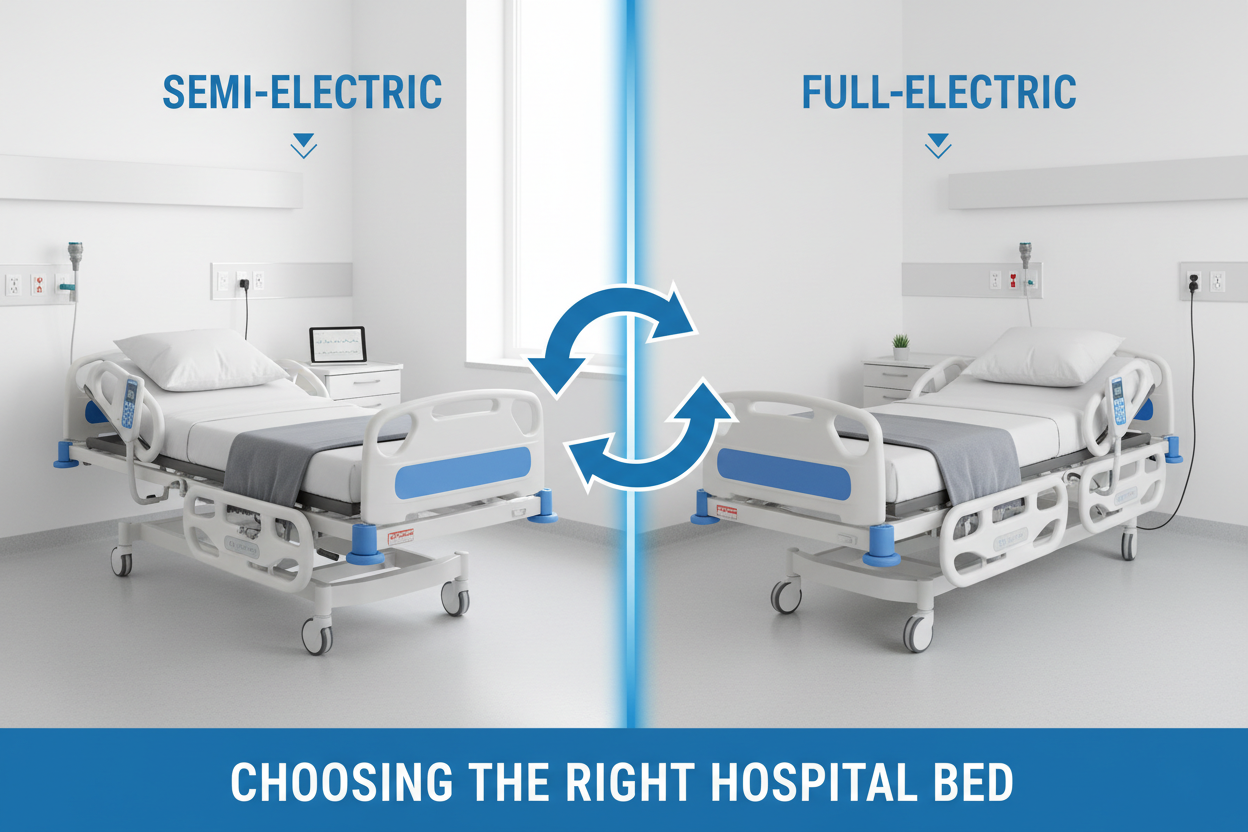
Semi Electric Hospital Bed vs Full Electric: Which One Should You Choose?
The right hospital bed plays a huge role in a patient's care, comfort, and safety. Two common options are the semi-electric and full-electric hospital beds. While similar in design and support for medical recovery, they differ in adjustments and in the physical effort required of caregivers to operate them.
The semi-electric hospital bed has powered head and foot adjustability, with height functions needing manual operation. The full-electric bed offers full motorized control of all major positions.
To dive deeper, this guide explains the key differences between them in terms of functionality, ease of use, cost, and real-world applications, to help you decide which option best fits your care needs.
What Is a Semi-Electric Hospital Bed?
A semi-electric hospital bed offers a hybrid electric option that combines electric adjustments with manual operation. Both the head and foot bed sections are electronically adjustable with a handheld remote control. This gives the patient or caregiver control to raise or lower these sections, making adjustments for comfort, reading, or sleeping effortless. However, to control the bed’s overall height, you need to manually raise or lower it, typically with a hand crank located at the bottom of the bed frame.
This design makes semi-electric beds the main choice for short-term recovery and budget-conscious care environments. Because they include fewer electrical components than full-electric beds, they are much more affordable and easier to maintain. Another advantage is that you can use them during a power cut, as they can still be adjusted without electricity.
But even with this advantage, the manual height adjustment feature does have its drawbacks. Caregivers need to physically crank to adjust the bed up or down, which can become tiring if these adjustments are made often. Having to do this manually also limits a patient’s mobility and independence, as they cannot turn the crank themselves. If the bed needs to be adjusted several times a day, the physical demand will become a concern over time.
What Is a Full Electric Hospital Bed?
A full-electric hospital bed offers a completely motorized solution. The electric adjustment covers all bed adjustments, including head, foot, and bed height. The patient can operate every function easily with a handheld remote, so no physical cranking is required. With all of these options, the full-electric bed is often the most convenient choice for both patients and caregivers.
Full-electric beds also allow patients to adjust their position without assistance during the day or at night, giving them greater independence. This allows those recovering from surgery or managing chronic conditions to control their own bed position. Caregivers no longer experience the physical strain of constant height adjustments, making transitions effortless during transfers, bathing, repositioning, and medical care.
Many full-electric models come with other advanced features such as Trendelenburg and reverse Trendelenburg positioning, emergency battery backup systems, super-quiet motors, and capabilities for higher-weight use. Such features make full-electric beds well-suited for patients in long-term care settings, professional facilities, and for patients who require frequent repositioning.
Head-to-Head Feature Comparison
|
Feature |
Semi-Electric Bed |
Full Electric Bed |
|
Head Adjustment |
Electric |
Electric |
|
Foot Adjustment |
Electric |
Electric |
|
Height Adjustment |
Manual hand crank |
Electric |
|
Patient Independence |
Limited |
High |
|
Caregiver Effort |
Moderate |
Minimal |
|
Typical Price Range |
$1,500–$2,500 |
$2,500–$5,000+ |
|
Power Outage Function |
Height adjustable manually |
Requires battery backup |
|
Maintenance Complexity |
Lower |
Higher |
|
Weight Capacity |
Around 450 lbs |
450–1,000 lbs |
The differences between the two types of beds are apparent in day-to-day care situations.
How often patients need height adjustments affects caregivers' workload and their risk of injury. Manually cranked beds that require frequent adjustments can cause fatigue or strain, especially in long-term care settings. Another factor is the patient’s welfare and independence, including their dignity and emotional well-being: individuals who can control their own positioning often feel more confident and comfortable.
Pros and Cons Overview
Semi-electric hospital beds provide a cost-effective, albeit limited solution, as they offer many comfort features at a lower price. Their simpler mechanical design reduces the risk of electrical issues, and the manual height crank adjuster remains functional during power outages. This type of bed is ideal for short-term recovery or environments where budget is a concern. It is also perfect when the patient doesn’t need to change the bed height often.
At the same time, constantly adjusting height by hand can be a physically demanding burden for caregivers. It also limits the patient’s independence. Adjustments are slower, and frequent repositioning may become inconvenient or tiring over time.
Full-electric hospital beds offer complete control and efficiency. They take away caregiver strain, support a patient’s independence, and make quick adjustments in urgent situations. Their advanced features and ability to handle heavier loads make them ideal for long-term care and complex medical needs. They only have the drawback of a higher price tag and complete reliance on electricity, although backup battery systems are always an option.
Cost and Value Considerations
Semi-electric hospital beds cost around $1,500 to $2,500, depending on the brand, construction quality, and accessories. Full-electric beds start at $2,500 and can go up to $5,000 for models that offer advanced positioning, bariatric support, or premium features.
While full-electric beds are more expensive upfront, they often offer greater long-term value in extended care settings, as well as less caregiver work, faster adjustment, and better patient comfort. Over months or years, the time and effort saved can easily outweigh the more expensive price tag.
Insurance coverage should also be considered; Medicare Part B can cover both semi-electric and full-electric hospital beds when prescribed as medically necessary by doctors. The coverage usually includes the bed frame, mattress, and side rails if the bed is purchased through approved suppliers. For private insurance, policies vary, so make sure to check what is covered and which benefits are included in advance.
When to Choose Each Type
Semi-electric hospital beds are often the best choice for a short-term recovery situation, such as surgical recovery or temporary healing/ injury rehabilitation. They are ideal for home care situations where caregivers are physically able to adjust the bed height and where the cost of the bed is a consideration. These beds are also practical as backup beds in areas where power reliability is an issue, since you can adjust their height without electricity.
A fully electric hospital bed is more suited to long-term or progressive care needs. For patients who need repositioning daily for comfort, breathing support, or circulation, fully motorized controls provide greater support, especially if caregivers have physical limitations of their own. In a professional setting, a full-electric bed helps to improve efficiency, safety, and patient satisfaction, making it a worthwhile investment.
Key Takeaways
The choice between a semi-electric and a full-electric hospital bed comes down to your budget and a balance of care duration, patient independence, and caregiver capacity.
Semi-electric beds offer you reliable comfort at a lower price. They are ideal for temporary care or budget-conscious situations. Full-electric beds provide the most patient care and convenience, reducing physical strain and supporting patient dignity.
When choosing, consider not only your current needs but also how your care needs may change over time. The right hospital bed investment can improve comfort, safety, and quality of life for both patients and caregivers.
Frequently Asked Questions
Can a semi-electric hospital bed still function during a power outage?
Yes, although the electric head and foot adjustments will not work without power. The bed’s manual crank will still work and allow caregivers to raise and lower the bed as needed.
Is a full-electric hospital bed worth the extra cost?
This comes down to your budget and the patient's exact care needs. For long-term care or for patients who require frequent positioning, full-electric beds can justify their higher price by saving time, reducing caregiver strain, and improving patient independence.
Does insurance cover both semi-electric and full-electric hospital beds?
Medicare Part B coverage should cover both types of beds when medically necessary and prescribed by a physician. Private insurance coverage varies, so be sure to confirm details with your provider.


