

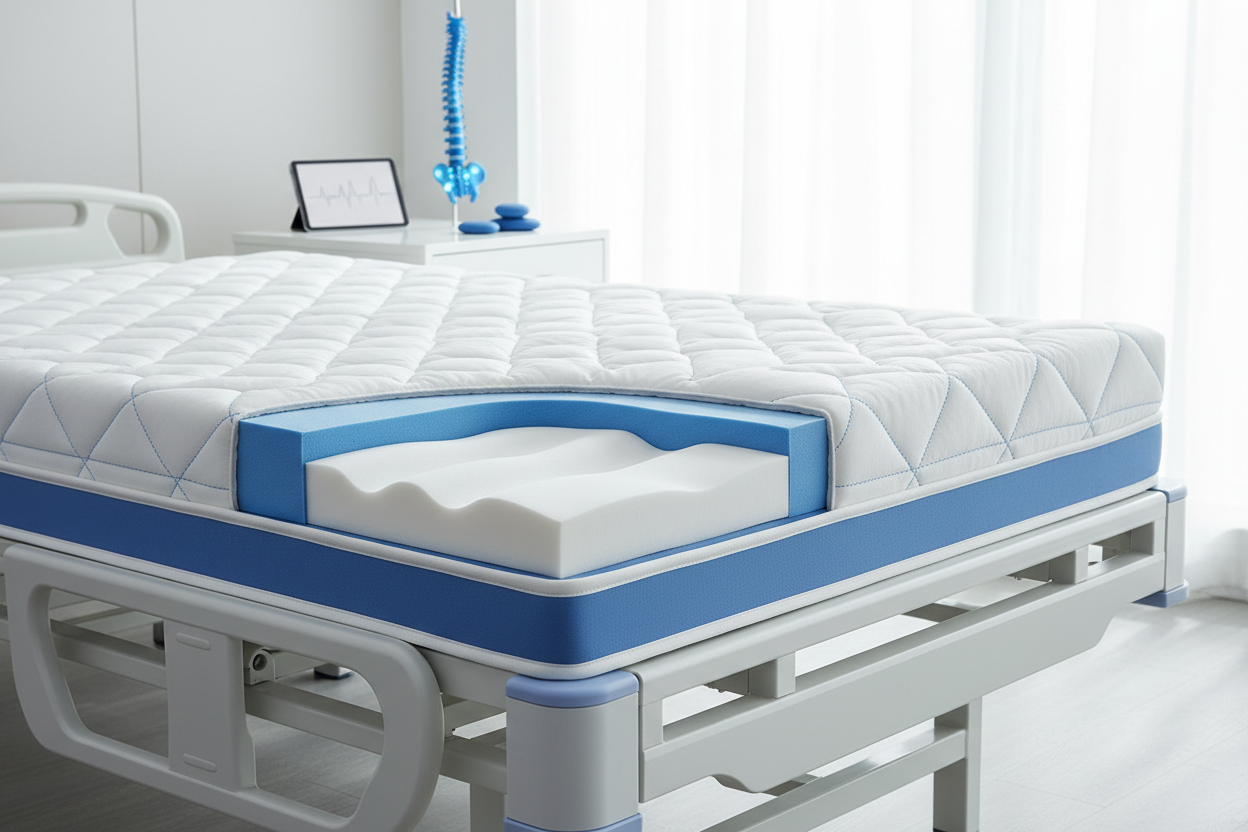
The Complete Guide to Choosing the Best Hospital Bed Mattress for Back Pain Relief
An estimated 75-85% of Americans experience back pain at some point in their lives. At any given second, around a quarter of all Americans suffer from back pain, with over 8% of Americans describing it as severe back pain that limits their mobility and impacts their work, mobility, and socializing.
For someone confined to bed due to illness or injury, or in recovery, the right hospital mattress can make the difference between healing and suffering. As a healthcare facility administrator, caregiver, or home care provider, your choice of hospital mattresses designed for back pain is key to patient recovery and comfort. So where do you start?
The Connection Between Hospital Bed Mattresses and Back Pain
Hospital bed mattresses are fundamentally different from the regular mattresses we use at home. A mattress is supposed to be comfortable, but these types of mattresses must explicitly:
- Support patients who may spend extended periods in bed, often in various positions.
- Help manage existing back conditions.
- Prevent new ones from developing.
The human spine maintains three natural curves: cervical, thoracic, and lumbar. A quality mattress for a hospital bed must support them all, regardless of the sleeping position.
Back pain in a hospital setting is frequently caused by multiple factors: prolonged immobility, post-surgical inflammation, underlying spinal conditions, or improper support during recovery.
These factors make the mattress a therapeutic tool rather than just a comfort item. The wrong mattress can worsen existing conditions, delay healing, and create pressure ulcers that complicate recovery.
Medical-grade mattresses are designed for easy cleaning and infection control. They also accommodate medical equipment and procedures while providing therapeutic benefits that actively support healing, rather than simply providing comfort.
Key Features to Look for in Hospital Bed Mattresses for Back Pain
Pressure Redistribution Technology
A therapeutic hospital mattress is designed to redistribute pressure evenly across the body.
Pressure points develop on beds when body weight is concentrated in small areas, such as the heels, sacrum, shoulders, and the back of the head. For patients with back pain, excessive pressure on the spine and surrounding muscles can trigger pain, which in turn reduces sleep quality.
Advanced hospital bed mattresses use multi-layered, high-density foam with different density zones. Others use air cells that can be adjusted individually, and some have gel-infused materials that conform to body contours. The goal is to keep the spine properly aligned and minimize pressure that restricts blood flow and causes discomfort.
Firmness and Support Balance
The firmness of a hospital bed remains a subject of debate in back pain management.
- If the mattress is too firm, it will fail to accommodate the spine's natural curves. It creates gaps at the lumbar region and forces muscles to work overtime.
- Too soft, and the spine can sink into unhealthy positions, which is particularly problematic for side sleepers whose spines may curve laterally.
Hospital bed mattresses for back pain are typically in the firm range, 5-7 on a 10-point firmness scale. The best options offer adjustability. Some feature dual-firmness sides or zones with varying support levels. Others include adjustable air chambers that allow caregivers to adjust firmness based on patient feedback and evolving needs throughout recovery.
Edge Support and Stability
Edge support is an often-overlooked feature that is key for patients with back pain who require assistance getting in and out of bed. Weak edges can easily collapse under weight, making transfers difficult and potentially dangerous. They also reduce the usable sleeping surface and force patients toward the center, where they may adopt unhealthy positions.
High-quality hospital bed mattresses have reinforced perimeters that incorporate high-density foam or specialized edge-support systems. This feature offers a stable sitting platform and makes caregiver-assisted transfers safer. With these mattresses, the entire surface remains supportive.
Temperature Regulation
Heat retention can exacerbate back pain by increasing inflammation and preventing a good night’s sleep.
Hospital patients frequently have compromised thermoregulation, and many back pain conditions worsen with a high body temperature. Traditional memory foam, while excellent for pressure relief, traps heat.
Modern hospital mattresses offer innovative solutions, such as:
- Gel-infused foams that conduct heat away from the body
- Open-cell foam structures that improve airflow
- Phase-change materials that absorb and release heat
- Breathable cover fabrics that don’t trap moisture.
Some advanced models even include active temperature-control systems with air-circulation channels.
Antimicrobial and Waterproof Protection
In both hospital settings and home care, you need excellent infection control. The mattress cover must be completely waterproof to protect the internal materials from bodily fluids, while remaining breathable enough to prevent heat buildup. Medical-grade covers are made of polyurethane or similar materials and are designed to withstand aggressive cleaning protocols.
In addition to waterproofing, antimicrobial treatments prevent bacterial and fungal growth. Silver ion technology, copper-infused fabrics, and antimicrobial chemical treatments are standard. These features protect the patient and extend the mattress's lifespan by preventing internal contamination that degrades materials and causes odors.
Types of Hospital Bed Mattresses for Back Pain Management
Foam Hospital Mattresses
High-density foam mattresses are a popular choice in healthcare environments thanks to their outstanding pressure relief, cost-effectiveness, and durability. Medical-grade foam is much denser than standard foam, typically 1.8 to 2.5 pounds per cubic foot. It keeps its support characteristics over thousands of hours of use.
Mattresses designed with multi-layer foam strategically combine different foam types:
- A firm base layer provides excellent support and prevents sinking, which can misalign the spine.
- Middle layers of transitional foam promote even weight distribution.
- Top comfort layers, often with memory foam or latex-like materials, support and envelop the body.
The main advantage of a foam mattress is its consistent performance. Whereas air and water systems require maintenance, foam does not. It also requires no inflation or adjustment.
The disadvantage is the risk of heat retention, though modern foam technologies have addressed this through improved materials and construction.
Air-Fluidized and Low Air Loss Mattresses
Advanced air systems are the latest and most advanced design of pressure redistribution technology.
Low-air-loss mattresses feature multiple air cells that can be adjusted individually for customized pressure support in support zones. Air circulates continuously through the system, providing both pressure relief and temperature control.
For patients with back pain, adjustability is the primary benefit. As pain levels fluctuate or as different positions become necessary, the mattress can be reconfigured without requiring a complete replacement. Some systems include automatic pressure-sensing that adjusts air levels in response to patient movement and position changes.
Air-fluidized mattresses expand on this concept further by using silicone-coated beads that behave like a fluid when air flows through them. These are usually used for patients with severe wounds or extreme pressure sensitivity, but they provide unmatched pressure redistribution for back pain patients who also face complications like pressure ulcers.
The drawbacks to these systems are higher costs, maintenance requirements, and the need for electrical power. The motors that inflate and adjust the air cells can also create low-level noise that some patients find disruptive.
Pressure Redistribution Mattresses
Pressure redistribution mattresses or alternating pressure mattresses aim to address static loading, which is constant pressure on the same body areas. They inflate and deflate air cells in a pattern, switching between cells or zones every few minutes.
This dynamic pressure relief helps improve blood circulation, prevent bedsores, and may help reduce back pain by avoiding muscle tension caused by sustained pressure. The constant subtle movement may also help prevent the stiffness that immobile patients often experience.
To be clear, pressure mattresses don't directly treat back pain, but they may play a key role in prevention. By reducing sustained pressure on the body, they may help prevent secondary complications of bedrest - such as muscle stiffness and poor circulation - that can worsen existing back conditions. Improved circulation delivers oxygen and nutrients to healing tissues and helps the body feel better.
Hybrid Hospital Mattresses
No technology can address or prevent all issues. Even so, many manufacturers now offer hybrid systems that combine foam comfort layers with air-adjustable support cores or pair memory foam with innerspring support structures. These hybrid designs aim to combine the benefits of different technologies while minimizing the drawbacks.
One popular hybrid configuration places high-resilience foam over air cells to provide the contouring pressure relief of foam with the adjustability of air. Another popular design uses pocketed coils for support, with gel-infused foam comfort layers that deliver the durable support of innersprings while providing modern pressure-relief materials.
Hospital Bed Mattress Sizing and Compatibility Considerations
Mattress sizes
Hospital mattresses are available in standard institutional sizes. They also need to be compatible with existing bed frames and medical equipment. A standard hospital bed is typically 36 inches by 80 inches, while bariatric mattresses can be up to 48 or 54 inches wide to accommodate larger patients safely.
Mattress thickness
Mattress thickness is also a key factor in managing back pain.
Hospital mattress thickness ranges from 5 to 10 inches, with therapeutic models typically at the higher end. Thicker mattresses can improve pressure redistribution, boosting comfort and support. However, they must be compatible with bed rails and positioning equipment, and meet height requirements for safe patient transfers.
Weight capacity
Hospital bed mattresses typically support 350-450 pounds, while bariatric models accommodate 600-1000 pounds. You must not exceed the weight limit, as this will compromise the mattress's therapeutic benefits and accelerate wear.
How to Assess Hospital Bed Mattress Quality and Durability
When assessing a mattress for quality and durability, note that not all hospital mattresses are created equal. Variations can affect both patient outcomes and long-term costs.
Mattress density
Density ratings are a good first indicator of foam mattress durability: higher-density foams resist compression and maintain their support longer. For systems that use air, the build quality and durability of the pump mechanism, as well as the puncture resistance of the air cells, will determine the mattress's lifespan.
Warranty Coverage
The warranty coverage for hospital bed mattresses reflects the manufacturer's confidence in its product. High-quality hospital mattresses typically come with 5-10-year warranties covering both materials and construction. Some manufacturers offer more extended coverage on specific components. These warranties may include exclusions for institutional use or require specific maintenance protocols, so make sure to read the fine print carefully.
Testing certifications
A mattress designed specifically for healthcare applications, rather than a standard consumer mattress, will carry certifications such as CertiPUR-US for foam safety, medical device registrations, and compliance with healthcare standards, including CAL 117 fire safety requirements.
Maintenance and Longevity of Hospital Bed Mattresses
Like all devices, with proper maintenance and upkeep, you can extend your mattress’s life, delivering continued support for back pain.
Hospital mattresses need to be cleaned regularly with hospital-grade disinfectants, but harsh chemicals can degrade materials over time. Follow the manufacturer's cleaning protocols to prevent damage and maintain infection control standards.
Check for tears in covers, foam degradation, air leaks in pneumatic systems, and compression. All these signs indicate the mattress has exceeded its useful life. Even minor cover damage requires immediate repair or replacement, as fluid infiltration can damage internal materials and increase the risk of infection.
Rotate your mattress regularly to distribute wear evenly, although not all hospital mattresses can be flipped if they are not designed for it. Some manufacturers recommend rotating the mattress from head to foot every few months, while others create their products with specified orientation requirements for optimal performance.
Cost Considerations and Value Assessment
Carefully consider the cost of a hospital bed mattress, as the price can vary greatly, from a few hundred dollars for a basic foam model all the way up to several thousand for advanced air systems. The per-use cost over a mattress's lifespan is often higher for mid- to upper-tier products that outlast lower-tier counterparts and deliver better support.
For home use and home care, factors such as insurance coverage or Medicare may apply, particularly when the mattress serves a documented medical purpose in treating or preventing conditions.
Healthcare facilities must consider not only the purchase price but also ongoing maintenance costs, replacement frequency, and the impact on patient outcomes, all of which may affect reimbursement under value-based care models.
Short-term rental options are also available, providing access to high-end therapeutic mattresses without the upfront investment. Rental can be ideal for post-surgical recovery or for temporary conditions where specialized support is time-limited.
Hospital Bed Mattress for Back Pain: The Choice is Yours
To get the right hospital mattress for back pain requires balancing multiple factors:
- The severity and type of back condition
- The duration of use
- The patient's mobility level
- The patient's body weight
- Any additional medical concerns
- And your budget constraints
Sadly, there is no single mattress that is universally the best. The right choice depends on your individual circumstances and priorities, including practicality and comfort.
Start by consulting healthcare providers who are familiar with the specific back condition being treated. Physical therapists, in particular, can provide helpful advice about needs and support requirements. Before full long-term use, consider requesting trial periods or demos when available, as personal experience with the mattress is the most definitive way to assess whether it meets your expectations, aside from specifications.
Whenever possible, prioritize pressure redistribution and spinal alignment support over other comfort features, as these directly affect the patient's back pain management. Additional features such as temperature control and the mattress's ease of cleaning are desirable, but they are not the sole purpose of your purchase. Remember that with hospital bed mattresses, the most expensive option isn't always the best for your needs. On the other hand, choosing solely on price without considering quality and fit is a false economy that often leads to poor health outcomes and additional expenses.
The right hospital mattress will be your partner in the recovery process, providing the support and patient comfort needed for healing and helping prevent complications from extended bed rest. There are many mattress technologies available. You only need accurate information and a reliable, trusted seller like Shop Home Med to choose the option that best supports back pain management.


