

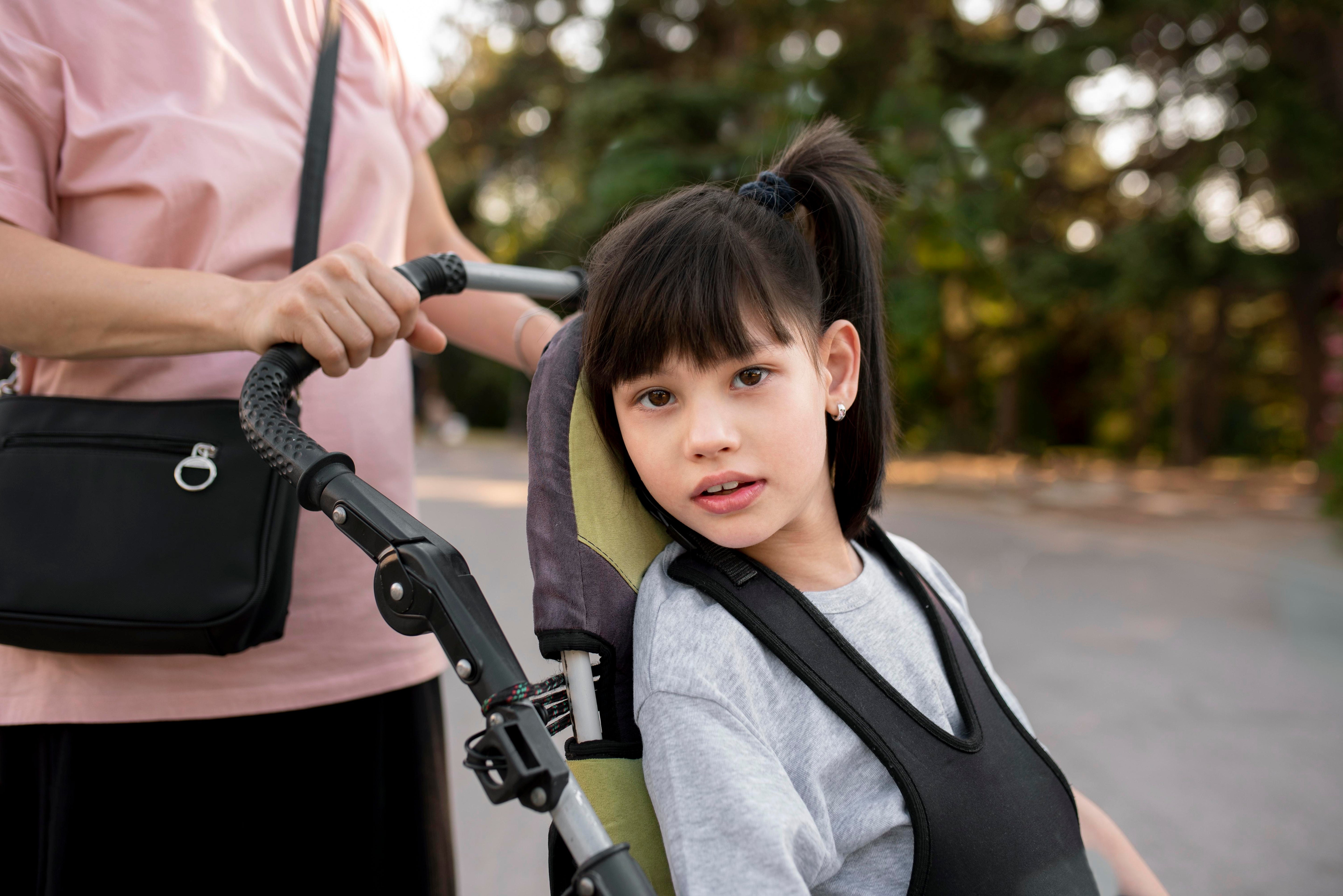
An adaptive stroller is a key piece of child care equipment when you have a child with special needs, as it assists with their daily mobility, comfort, and overall health. You do need to ensure your child’s proper positioning, though, to support their physical development, safety, and overall well-being. This both helps children’s posture and boosts the quality of their everyday life.
This article explains:
- Why your child needs the correct seating position in adaptive strollers to prevent health complications.
- How to sit your child correctly in their adaptive stroller.
- How support accessories can be of use.
- Practical tips and strategies for maintaining good posture and avoiding pressure points.
The Importance of Seating Your Child Properly
Let’s start with the basics: Seating your child correctly in your adaptive stroller allows for full upper body support of your child. When positioned correctly, the back of the child keeps the natural curve of the spine and reduces secondary complications like scoliosis, hip dysplasia, or respiratory issues. Correct positioning also helps with blood circulation and prevents pressure sores, which are caused by imbalanced weight distribution. For children with weak muscles or low tonus, correct sitting offers support for daily living activities and interaction with their surroundings, letting them feel part of the community.
Poor positioning of your child in their adaptive stroller can cause health issues like slumping. It can also compromise lung function and make it difficult to breathe, ultimately causing lower oxygenation levels. Poor positioning of the hips leads to contractures and joint deformity over time, while inefficient seating causes discomfort and agitation, making outings difficult and stressful for both the child and the caregiver.
The right positioning of your child in the stroller carries some important neurological benefits as well. With the child’s body properly aligned, the nervous system functions better and may improve muscle tone, reflexes, and overall neurological responses. Also, when children feel comfortable, they are more engaged with their environment and can actively participate in daily activities. This boosts their self-confidence and their socializing.
How to Seat Your Child
To seat your child properly, you need to adapt their needs to the stroller's adjustable features and seat depth.
Start by positioning your child's hips at the back of the seat to create a 90-degree hip and knee angle. This is the foundation position, which creates a stable base support for the entire body. The pelvis should be at the right height, neutral, and not tilt forward or backward excessively. This position is the foundation for the best spinal positioning, comfort, and well-being.
Children who are unable to maintain their position independently should use built-in positioning features and accessory supports. The majority of adaptive strollers have adjustable seat depths, back angles, and lateral supports tailored to individual needs. They provide enough support for body alignment without restricting their movement.
When you transfer your child, work methodically. Position the seat to its most open setting to make the transfer easier and safer. Stabilize the trunk of your child and steer their hips to the seat back, then slowly lower the backrest to the right angle. This provides the correct positioning, so you don’t have to reposition after seating.
Some young children require more support than others, depending on their muscle tone. Asymmetrical postures may need extra lateral support or wedges for a midline position. Always consult your child's therapist or health care provider for individual recommendations.
Support Cushions and Extras
Adaptive strollers come with a range of accessories that can help your child sit upright and be comfortable. Accessories include positioning wedges and cushions, which add to comfort and positioning. They are applied with embedded components to provide individualized seating solutions.
Lateral trunk supports are necessary for children who can’t maintain midline positioning unaided. Position these supports so that they place light pressure without interfering with breathing or arm movement.
Abductor wedges and hip guides stabilize correct hip positioning, which is helpful for children who are at risk of hip subluxation or dislocation. These should be positioned so that they do not permit over-internal rotation of the hips. Fit must be comfortable, not restrictive.
Head and neck supports are particularly important for children with poor head control. These need to support the head in a neutral, rather than flexed forward or extended backward, position. The right head positioning offers comfort and helps with airway positioning and visual alignment.
Cushions for seat and back positions distribute pressure and are comfortable for children who sit in strollers for prolonged periods. Memory foam or gel pillows help reduce pressure points. When selecting a cushion for your child, make sure that it doesn’t impact the seat size or interfere with the safety harness installation.
Maintaining Good Posture
When children move, they may lose their body alignment, which is why you should keep a close eye on them and adapt their posture accordingly. Check their position frequently to help them feel comfortable. On long trips, check every 30 minutes. Look for slouching, asymmetrical seating, or if they have slid forward. The head must stay centered over the shoulders, shoulders should remain level and loose, and the spine must keep its natural curves. Children will show signs of discomfort, such as obvious distress, increased agitation, and changes in their breathing and the color of their legs. If your child displays such symptoms, stop and reposition them.
Temperature can also affect how well children keep their posture. If your child becomes overheated, it can easily lead to restlessness and more movement. Likewise, the cold will increase tone and stiffness. Keep track of the temperature and adjust your child’s clothing or coverings as necessary.
Encourage active involvement when possible. If your child displays voluntary movement, let them shift their weight or make easy movements within the position supports to help with circulation and prevent stiffness.
Correct Use of Footrests
Footrests help your child remain seated correctly and safely in the stroller.
With the proper foot rest adjustment, your child’s thighs are fully supported and keep a 90-degree knee angle. Their feet must rest comfortably without hanging limp or forced placement. The angles of the footrest should allow the ankles to come to rest naturally, neither pointing downward nor being excessively pulled upwards. This prevents contractures and helps with blood circulation in the feet and lower legs.
If your child suffers from any tone issues, the wrong foot positioning can cause abnormal reflexes, which can affect body posture. For some children, foot straps or ankle support can help with proper positioning. Make sure to adjust the footrests as your child grows. Adaptive strollers usually include height-adjustable footrests that require constant adjustment to keep the right positioning as leg length grows.
How to Avoid Pressure Points
Pressure points usually happen when bony prominences make contact with hard surfaces, particularly over the sacrum, sitting bones, and where positioning straps make contact with your child’s body. Pressure should be equally spread out over as large a surface area as possible. Use cushioning cautiously, as too much creates unstable surfaces and not enough creates pressure concentrations.
Keep an eye on where you place the straps and the tension they apply. Adjustable tension positioning straps need to be tight enough around your child to be safe, but not so tight that they create pressure lines or cut off circulation. Check that straps are not digging into your child’s skin or gripping them too tightly.
Check your child's skin regularly, especially after longer outings. Look closely for red marks, indents, or heat suggesting pressure problems. Adjust the positioning if you find suspicious spots.
General Do's and Don'ts
Do - Meet regularly with your child's healthcare team regarding positioning techniques and equipment requirements. They can offer personalized advice based on your situation and your child’s needs.
Do - Check your equipment frequently to make sure it works as it should. Check safety alerts and recalls about safety issues.
Do - Check positioning requirements frequently. What is appropriate now for your child may not be so when they are older. Requirements can shift when conditions change.
Don't - Ignore any non-verbal signs of discomfort from your child. Greater agitation or variation in muscle tone can be signs of positioning problems, even if your setup appears to be right.
Don't - Assume that expensive or high-tech gear is always the best. Many times, minor adjustments yield the biggest payoffs.
Don't - Compromise on safety over convenience. Always use the right safety restraints and follow the manufacturer's guidelines.
Final Tips
Adaptive seating helps position your child according to their needs and gives them the possibility to interact in comfort. When you place and position your child correctly and comfortably in an adaptive stroller, you are making their well-being and health your priority.
Understand your child’s needs and choose the right equipment, with precise initial positioning and ongoing adjustment. Talk regularly with healthcare professionals to adjust your positioning strategies according to your child’s needs.
Successful positioning is an ongoing process. It requires patience, attention, flexibility, and responsiveness. Your child benefits from better health and comfort. It also has an opportunity to actively participate in your family life and that of the community.
For more information on Adaptive strollers, check out Shop Home Med’s special needs stroller collection here: https://shophomemed.com/collections/special-needs-stroller


