

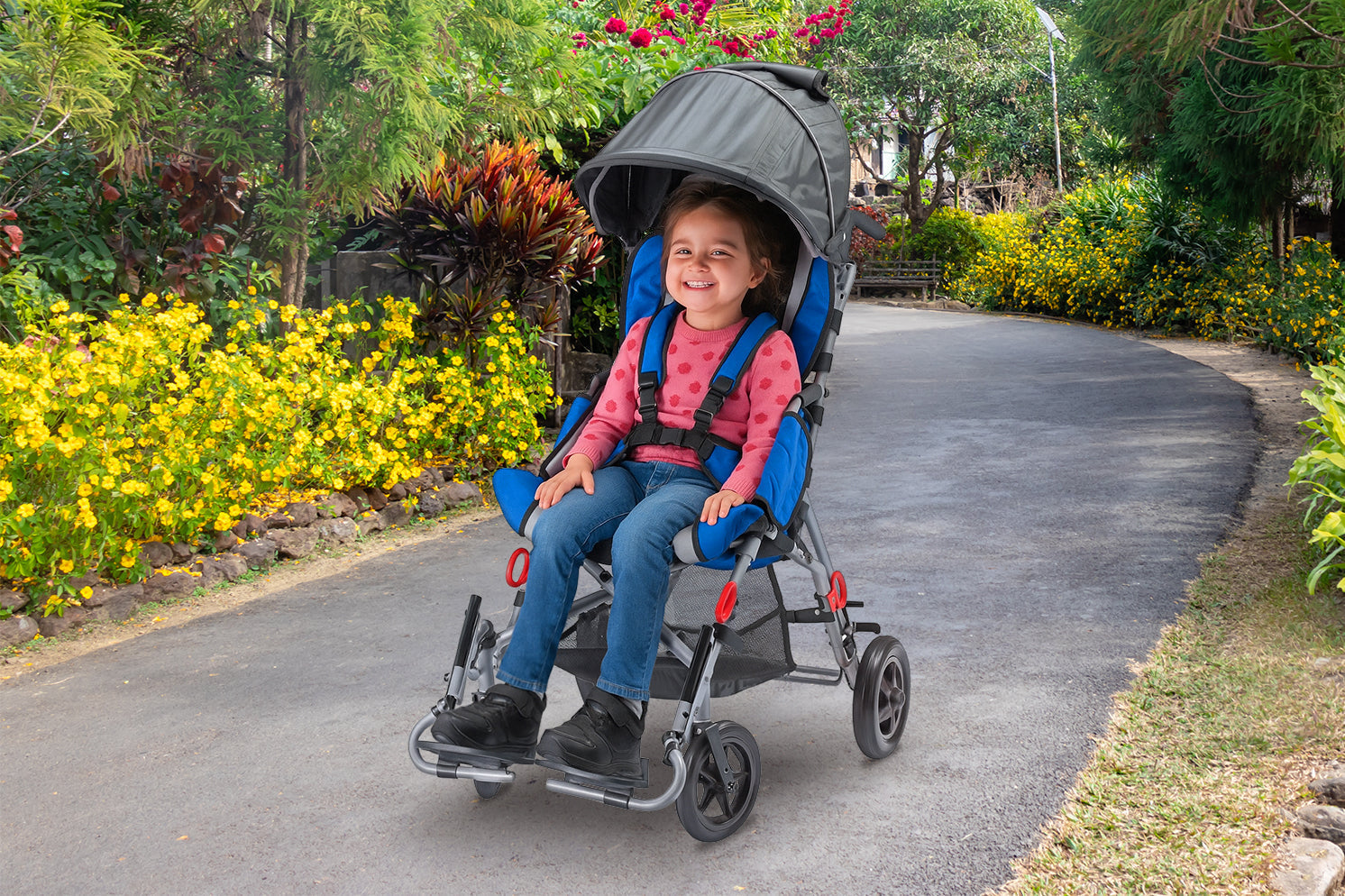
Traveling with a special needs stroller can feel daunting. With a little preparation, it becomes routine.
This guide shares ten parent-tested tips to smooth every step. You’ll learn how to confirm transit readiness, handle airline gate-check, secure the stroller on buses and vans, prevent damage, and keep your child comfortable on long days.
We also cover accessibility services and apps, planning for public transit and rideshares, what to pack in a small repair kit, and a quick post-trip safety check. Plan with confidence and enjoy the journey together.
1 – Confirm Your Stroller Is Travel-Rated
Check two different standards depending on how you travel.
For buses and accessible vans: look for a WC19 label on the stroller frame and plan to use a WC18-rated wheelchair tie-down and occupant restraint system (WTORS). WC19 identifies frames crash-tested for vehicle transport; WTORS is how you secure the frame and restrain the rider in a bus or van.
For airlines: many carriers allow gate-checking of strollers used as mobility aids, but size and weight limits vary. Measure your folded dimensions and note the weight, then confirm your airline’s policy before you book. At the airport, tell the staff the stroller is an assistive device so it’s handled appropriately.
If your stroller is not WC19 and you’re riding in a vehicle, use an appropriate car seat instead of the stroller as a seat. For flying, plan to gate-check and protect the stroller with a travel bag.
2 – Master Vehicle Tie-Downs and Restraints
Travel days are busy, so turn securement into a calm routine you can repeat every time.
-
Check the frame: use vehicle securement only if your stroller has WC19-labeled anchor points. If it is not WC19, do not use the stroller as a vehicle seat; use an appropriate child car seat.
-
Find the floor anchors: in buses and accessible vans, the four WTORS anchors are usually at the corners of the wheelchair space. Park facing forward, set the brakes, and remove loose items.
-
Secure the frame (4-point): attach front straps to the stroller’s labeled anchors first, then the rear straps. Tension evenly until the frame is stable without bending it.
-
Restrain the rider: use a vehicle-anchored lap or lap-shoulder belt. The stroller’s five-point harness supports posture but is not a crash-rated restraint.
-
Fit the belt correctly: route low over the bony pelvis and across the chest/shoulder, never across the soft abdomen or neck. Only use frame-mounted belt anchors if your model provides approved, integrated anchors.
-
Final check before moving: confirm no slack in straps, brakes are set, head and neck support are in place, and nothing blocks tie-downs. When unloading, release rear straps first, then front.
Practice this sequence at home or in the driveway once, and the process will feel quick and reassuring on travel days.
3 – Know Airline Rules and Breeze Through Security
Airline policies vary by carrier and plane type. Many airlines allow free gate-check for strollers used as assistive devices, but size and weight limits differ. Measure your stroller’s folded length, width, height, and weight at home, then confirm your airline’s policy before you book. At check-in, tell staff the stroller is an assistive device and request a gate-check tag so children can keep using it through the terminal until boarding the plane.
Gate-Check or On-Board Stroller?
Gate-checking lets you keep the stroller until you board and usually allows you to retrieve it at the jet bridge on arrival. On-board stow in the cabin is uncommon and depends on aircraft space and the airline’s rules; plan for gate-check as the default. Avoid curbside check if possible because pickup is often at baggage claim, and handling time can be longer. Remove trays and loose accessories and carry them on.
Use TSA Cares and Bring Medical Documents
Contact TSA Cares about 72 hours before travel if you want help through security. At the checkpoint, identify the stroller as an assistive device and request a manual inspection if rolling it through a scanner is not feasible. Medical liquids and supplies are allowed when declared and screened; a doctor’s note can be helpful context, though not required.
4 – Protect the Stroller From Damage in Transit
Use a padded travel bag or rigid case sized for your model to prevent scuffs and bent parts. Remove trays, cushions, headrests, and small positioning aids before handoff; pack them in your carry-on. Add clear labels reading “Assistive Device / Fragile,” plus your name and phone number on both the bag and the frame. Take time-stamped photos (all sides and any existing marks) at the gate before the staff handle it. On arrival, inspect the stroller at the jet bridge; if anything is damaged, report it immediately and file a claim with the airline before leaving the airport, using your photos and receipt.

5 – Keep Your Child Comfortable and Secure on Long Journeys
Comfort starts with posture and temperature. Long sits can create pressure spots and restlessness, so plan gentle resets and keep the environment steady. For more in-depth guidance on positioning and climate control, refer to our Positioning & Comfort Tips.
Schedule Positioning Breaks
Every 30–60 minutes (as your child tolerates), make a small reset: adjust tilt or recline for pressure relief, re-center hips, retighten the 5-point harness, and confirm footrests support the lower legs without dangling. Quick stretches help blood flow and mood.
Control Sun, Heat, and Hydration
Use the canopy outdoors, add a breathable seat liner, dress in light layers, and offer regular water. A cooling towel or small clip fan helps in hot terminals or cars. If the stroller was folded and carried, recheck harness height and belt tension before you roll again.

6 – Prepare a Sensory Survival Kit for Crowded Spaces
Loud, busy zones can overwhelm; a small kit keeps things calm without changing posture or climate settings.
Pack items your child already accepts:
• Ear defenders or loop earplugs to soften noise at gates and on platforms.
• A familiar fidget or chewable necklace (if used in therapy) to occupy hands and ease tension.
• A small weighted lap pad for soothing deep pressure while waiting.
• Sunglasses or a soft visor to reduce visual glare.
• A calming scent sachet (if helpful at home).
7 – Leverage Accessibility Apps and Airport Services
Modern technology has greatly helped streamline travel logistics for families with adaptive equipment needs. Traveling arrangements have come a long way, simplifying and updating travel arrangements for families with adaptive equipment needs.
Most major airlines' apps now allow you to pre-book wheelchair assistance in advance through their access feature so that airport staff can welcome you at the gate upon your arrival.
Download AccessNow or Wheelmap before your departure; these are crowd-sourced apps that can help locate elevators, accessible restroom facilities, and barrier-free routes throughout airports and transit systems.
Other mainstream ride-sharing services like Uber and Lyft offer wheelchair-friendly vehicle filters, allowing you to pair with specially outfitted vans that accommodate your stroller without requiring transfers or worrying about equipment malfunction.
8 – Plan Ahead for Public Transit and Rideshares
Be aware of local accessibility policies before boarding public transportation to avoid any potential delays or inconvenience during your journey. Rule of thumb: Think ahead and try to predict any possible problems.
Bus & Train Boarding Protocols
When riding on buses, ask the driver for a kneeling ramp when boarding. Position your stroller in the priority space area offered by wheelchair-accessible buses and use secure straps as per the posted instructions. Also, don’t forget to follow proper etiquette by allowing other mobility device users to access the space when possible.
Rideshare Tips
Provide your stroller’s folding size information to drivers through the app's messaging component before pickup, as this can be a significant advantage. Bring proof of disability documents to be eligible for accessible vehicle service and possible fare reductions provided by municipal transit agencies.
9 – Pack Essential Spares and Tool Basics
Always bring a small travel repair kit, as it can come in handy and help prevent minor issues from hindering your trip. Pack these five essentials in a small travel bag:
-
A spare inner tube or solid wheel - Quick replacement for punctures or broken wheels
-
Mini pump - Reinflate tires after flights or temperature changes
-
5mm hex key - Tighten loose frame, armrest, and footrest bolts
-
Small roll of duct tape - Emergency fixes for cracked plastic or loose padding
-
Antibacterial wipes - Clean surfaces and hands after roadside fixes
The above items will cover 90% of any stroller failures. Such preparation will allow you and your family to stay on the move, even when far from professional repair services.
10 – Post-Trip Inspection and Maintenance Check
Always conduct a ten-minute inspection of your gear after each trip to check that all is well and to prepare yourself safely for your next trip. Be sure to inspect all connection points and bolts for looseness due to traveling vibration and movement.
Inspect the brake systems thoroughly. Check for any signs of wear or tear on the brake pads or cables and confirm correct engagement. Also, inspect tires for punctures, embedded material, or sidewall damage from rough roads.
For full maintenance details, refer to our step-by-step Care and Maintenance Checklist to get your stroller travel-ready.

Key Takeaways
Always be prepared when you decide to travel. The more thoroughly you plan and organize your trip, the smoother and easier your journey will be.
Always check the travel rating and keep your equipment in good working condition. Use the sensory kit and technology tools, and then complete a thorough safety check-up.
This process will help you have a smooth and relaxing journey wherever you are taking your family. And if you’re looking for ideas on travel-ready strollers, see the models in our adaptive strollers collection.
Frequently Asked Questions
How can I get my stroller repaired or replaced if it is damaged by an airline?
Report the damage before leaving the airport. Tell staff the stroller is a mobility aid and file a written report at the gate or baggage office. Take time-stamped photos, note the agent’s name, and keep your receipts and tag. Policies for adaptive strollers vary by airline, but many follow DOT protections for mobility aids. If you need help with replacement costs, see our Insurance & Funding Guide.
Are there strollers that fold down small enough to fit in taxis or overhead bins?
Sometimes. Compact models may fit in overhead bins on certain planes, but space and rules vary, so plan to gate-check as the default. For taxis and rideshares, focus on quick fold, lift weight you can manage, and folded length and height. For travel-friendly picks that pack down small, see our Top 5 Adaptive Strollers Review.
Which stroller brands have the best track record for travel durability?
Look for solid construction, replaceable parts, strong warranty support, and verified owner reviews. Features like reinforced joints, quality wheel assemblies, and UV-resistant fabrics help strollers withstand frequent trips. Compare service networks and parts availability, not just materials claims. For side-by-side brand strengths and trade-offs, see our Adaptive Stroller Brand Comparison.
My child has autism. Are there any sensory-friendly tricks for navigating airports and buses?
Choose calmer times and quieter gates when possible. Practice a simple visual story of the trip at home. Ask the airline for preboarding or to board last to reduce aisle congestion. Request TSA Cares support and a private or manual screening if you have trouble with touch or noise. Pick window seats away from galleys. For buses, travel off-peak and sit forward-facing, away from speakers. For a fuller step-by-step plan, see our Autism Sensory Benefits guide.
What are my options when my child outgrows a travel stroller?
Consider higher-capacity models designed for bigger kids and teens, with adjustable seat depth, back height, and footrests. Check folded dimensions and lift weight to keep travel practical. If you need help narrowing options, start with our Strollers for Teens and Adults guide.


