

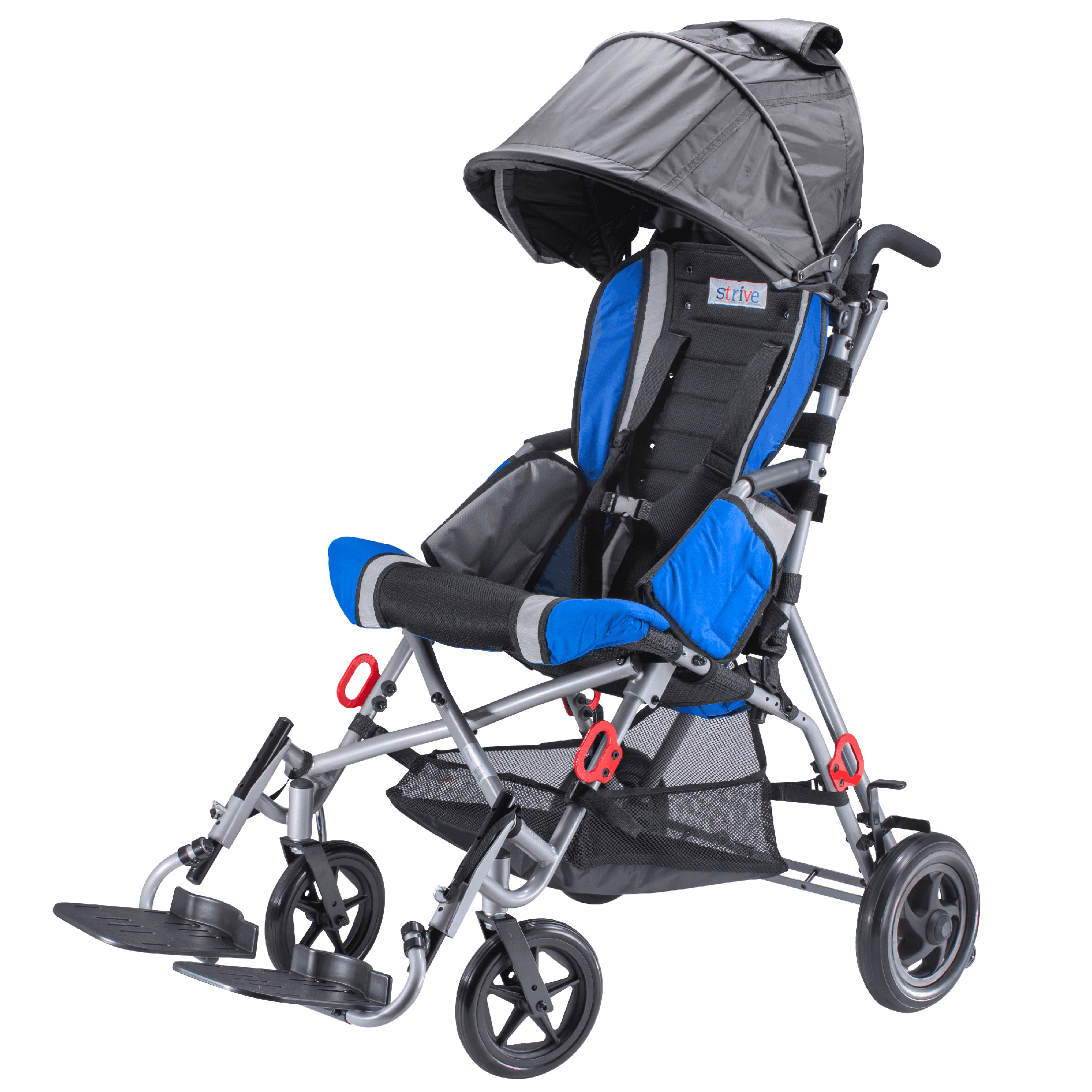
Figuring out how to pay for a special needs stroller can feel overwhelming. Still, families often succeed by combining insurance benefits, Medicaid programs, disability grants, tax-free savings accounts, and local fundraising. Each funding route comes with its paperwork and timing, but they’re all designed to work together. The good news? Shop Home Med’s experienced team helps you navigate the process and completes all forms for free, making it easier to secure the stroller your child needs.
This article explains:
-
The paperwork to gather: LMN, ICD-10, HCPCS, PT/OT notes
-
Using private insurance: DME policy, pre-authorization, appeals
-
Medicaid options: EPSDT for kids, state waivers
-
Extra funding: grants and Little Hands
-
Tax savings: FSA or HSA, Schedule A
-
When buying used or renting makes sense
Start with Medical Necessity & Documentation
Before any insurer, Medicaid program, or grant committee approves funding, they all ask the same critical question: Is this stroller medically necessary?
A strong, well-prepared paperwork packet not only answers that question clearly but also helps avoid delays, denials, or repetitive back-and-forth requests. Submitting all the right documents up front can significantly speed up the approval process and reduce frustration.
Here’s what most payers typically require:
-
Letter of Medical Necessity (LMN) signed by a licensed therapist or physician
-
ICD-10 diagnosis code(s) and the applicable HCPCS code for the stroller (usually E1229–E1239)
-
Most recent PT/OT evaluation showing current mobility needs and a growth-projection chart for sizing justification
To make this easier, Shop Home Med provides LMN templates and personalized quote sheets at no cost. Their team knows exactly what documentation decision-makers look for and can help you get everything in order from day one, eliminating guesswork and giving your application a much stronger start.
Private Insurance: Decode Your DME Benefits
Most private insurance plans categorize adaptive strollers as durable medical equipment (DME), but getting them covered depends entirely on following your insurer’s exact process. Missing a single step can trigger delays or denials, so clarity upfront is key.
Here’s how to navigate it:
-
Call your insurance benefits line and ask for the DME wheelchair-stroller policy and pre-authorization form.
-
Submit a complete packet including:
-
Therapist’s Letter of Medical Necessity
-
Itemized quote from the supplier
-
Two photos of the recommended product
-
If denied, request the written denial reason. Then:
-
Revise the LMN with stronger medical-necessity language
-
Include an updated therapist letter
-
Request a peer-to-peer review with a clinical reviewer
Expect about 14–30 days for an initial decision and up to 30 days for appeals.
Need help with this step? Shop Home Med’s team can complete the pre-authorization paperwork for you, making sure everything aligns with your insurer’s policy from the start.
Medicaid & State Waiver Programs
If your child is on Medicaid, EPSDT (Early and Periodic Screening, Diagnostic, and Treatment) can cover a medically necessary adaptive stroller when prescribed by a clinician. For older children and adults, many states offer additional help through waiver programs that fund custom DME (durable medical equipment) outside of standard Medicaid rules.
Here’s how to get started:
-
Reference EPSDT when speaking with the Medicaid representative and include the Letter of Medical Necessity (LMN) and the correct HCPCS code.
-
Ask your case manager which state waiver (like Katie Beckett or Community Living) pays for adaptive or custom DME.
-
Upload your LMN and quote to the waiver portal. Have the case manager log the medical need right away to prevent delays.
-
Always keep copies of every form submitted; most states provide a decision within 45 days.
Shop Home Med offers waiver-ready quotes and can assist with portal uploads at no cost, making the process far less stressful.
Charity Grants & Non-Profit Foundations
When insurance or Medicaid doesn’t cover the full cost of an adaptive stroller, charity grants and non-profit foundations often step in to bridge the gap, especially for families managing rare or complex conditions.
Here are some key programs to explore:
-
Variety—The Children’s Charity: Check with your state chapter for the latest grant cap and application deadline.
-
Easterseals Equipment Fund: Confirm the current per-child limit and quarterly application windows.
-
UnitedHealthcare Children’s Foundation: Look up the award ceiling and the next funding-cycle dates.
-
Cerebral Palsy Alliance Research Foundation: Verify the annual grant amount and submission deadline.
-
Autism Speaks Cares Grant: Make sure their emergency-grant limit and “open until funds depleted” policy are still in effect.
When applying, storytelling makes a difference: begin with your child’s mobility goal, describe one real-life challenge or success, and finish with a quote from your therapist’s Letter of Medical Necessity. This narrative structure resonates most with grant reviewers and boosts your chances of approval.
Tax-Advantaged Accounts & Personal Finance Tools
The IRS allows families to use untaxed dollars to purchase adaptive equipment, which can lower the true cost of a special needs stroller by 20–30% through tax savings.
Here’s how to make the most of these options:
-
FSA / HSA: Request an itemized invoice from Shop Home Med that includes the HCPCS code and labels the item as durable medical equipment. Pay with your FSA or HSA card before the plan-year deadline.
-
IRS Schedule A: If your out-of-pocket medical costs go over 7.5% of your adjusted gross income (AGI), you may be able to deduct the excess. Keep all receipts and the Letter of Medical Necessity.
-
ABLE Account: If your child or dependent became disabled before age 26, consider funding an ABLE account. You can use this to pay for the stroller or future repairs, tax-free.
Shop Home Med provides all necessary invoices and codes for tax documentation at no additional charge, helping you stay organized and save more.
Crowdfunding, Community Fundraisers, and SHM Initiatives
When time is tight or coverage falls short, community fundraising can often fill the gap faster than formal programs. Families across the country successfully raise the full cost of a special needs stroller by sharing their story and rallying support online and in local circles.
To get started, follow these best practices:
-
Set a fundraising goal that matches your official quote from Shop Home Med.
-
Record a short 60-second video showcasing your child’s mobility goal and how the stroller will help.
-
Post weekly updates with photos and any distance milestones to keep supporters engaged.
-
Review the platform’s current fees, payment processing costs, payout timing, and country eligibility before you launch.
Shop Home Med’s Little Hands program creates a personalized donation page for your child so supporters can contribute toward your stroller purchase. Donations are applied directly to your Shop Home Med order.
Retailer & Manufacturer Support Services
Expert retailers can significantly reduce out-of-pocket costs beyond what insurance, Medicaid, or grants provide by leveraging additional support services. At Shop Home Med, families receive free paperwork assistance. From itemized quotes with CPT/HCPCS codes to pre-filled insurer forms, for smoother, faster approvals.
When it comes to payment, Shop Home Med offers flexible options: Shop Pay installment plans (recently available up to 12 months with 0% interest) and full compatibility with FSA or HSA debit cards for eligible orders. They also confirm whether the stroller you're considering qualifies.
Incentives may include manufacturer mail-in rebates, loyalty upgrade credits, and growth-kit offers for expanding stroller sizes without full replacement. If available, they’ll notify you about demo or scratch‑and‑dent discounts. Just check with Shop Home Med’s customer support to see what's in stock.
All these retailer and manufacturer perks can stack with insurance, Medicaid, or grants to shrink the remaining cost you pay.
Ready for an official quote insurers and grants accept? Browse our Special Needs Stroller Collection to choose a model and generate an itemized quote.
Buy Used, Rent, or Trade In for Savings
Families often explore rentals or refurbished strollers first when facing tight budgets, but each route has its trade-offs that are worth weighing carefully.
Here’s a quick look at the alternatives:
-
Renting is ideal for a short trip or to test a model.
-
Pros: No long-term commitment.
-
Cons: Ongoing monthly fees, limited size availability, and prior wear that’s hard to assess.
-
Buying refurbished has a lower upfront cost.
-
Pros: Budget-friendly.
-
Cons: Unknown wear history, limited warranty, and older product codes that can complicate insurance review..
-
Trade-in deals or swaps can reduce upfront cost through local stores or online groups.
-
Pros: Immediate savings.
-
Cons: Inventory is hit-or-miss, and essential safety labels or manuals may be missing.
In contrast, a brand-new stroller from Shop Home Med includes a full manufacturer’s warranty, custom sizing consultation, and the option to pay using FSA/HSA funds. These benefits often outweigh the hidden costs and risks of second-hand options.
Conclusion & Funding Action Checklist
Remember, you're not alone; multiple funding paths can work together, and Shop Home Med is here to guide you through every step.
Follow this six-point checklist to move forward confidently:
-
Submit LMN and Shop Home Med quote to private insurance
-
Call the Medicaid case manager and request a waiver slot
-
Calendar the next charity-grant deadline and gather paperwork
-
Request an itemized invoice for FSA/HSA payment
-
Launch a community fundraiser with the SHM quote and photos
-
Inspect the WC19 label and serial number when considering rental or used units
For free paperwork assistance or help with any step, reach out to the Shop Home Med Funding Team today.
Common Questions
How do I pick a realistic stroller price for my funding application?
Start by using a current quote from a reputable medical supplier. Include tax, shipping, and any necessary accessories to reflect the full cost.
What measurements will insurers or grant committees ask for with the quote?
Expect to provide your child’s weight, height, seated hip width, and growth projections, along with the recommended stroller’s specs. See our pediatric stroller sizing guide for help.
How can I compare models to find the best stroller for my child’s needs?
Look at features like seat support, transportability, terrain use, and size range. Reviews and therapist input can help narrow the options.
Should I request funding for a stroller or a wheelchair? How do I decide which fits best?
Strollers are ideal for younger children or part-time use, while wheelchairs offer more customization and durability for daily needs. Your therapist can help you find the best fit.
Funding is approved, and our first flight is booked. What steps keep the stroller safe while we travel?
Use a travel bag, label all parts with your contact info, and check airline policies in advance to protect your equipment.


