

As your parents or elderly family members move into your home, ensuring their comfort and safety is essential. You want them to enjoy their golden years with as much independence as possible. However, homes are not always designed with accessibility, especially when caring for older adults with mobility or health concerns. Fortunately, with some thoughtful modifications, you can make your home more accessible and safe.
In this article, we’ll discuss the home modifications you’ll need to consider and the types of equipment that can enhance your loved one's mobility and comfort.
Why Accessibility Modifications Are Important
As we age, our physical abilities change. Once simple tasks, like walking up the stairs or standing in the shower, can become challenging. When bringing an elderly parent or relative into your home, you must make modifications that support their independence while minimizing the risk of injury. Accessibility isn't just about comfort—it's about ensuring a safe environment where accidents like slips or falls are less likely to happen.
Assessing Your Home for Accessibility Needs
Before diving into home modifications, take time to evaluate your living space. Consider factors like:
- Does your home have stairs or narrow hallways?
- Are the doorways wide enough for a wheelchair?
- Is there enough room to move around furniture safely?
Conducting a thorough assessment will help you pinpoint areas that need modification. Let’s explore some essential changes.
{start}
Home Modifications for Improved Accessibility
As your parents or elderly family members move into your home, ensuring their comfort and safety is essential. You want them to enjoy their golden years with as much independence as possible. However, homes are not always designed with accessibility, especially when caring for older adults with mobility or health concerns. Fortunately, with some thoughtful modifications, you can make your home more accessible and safe.
In this article, we’ll dive into the home modifications you’ll need to consider and the types of equipment that can enhance both mobility and comfort for your loved ones.
Why Accessibility Modifications Are Important
As we age, our physical abilities change. Once simple tasks, like walking up the stairs or standing in the shower, can become challenging. When bringing an elderly parent or relative into your home, you must make modifications that support their independence while minimizing the risk of injury. Accessibility isn't just about comfort—it's about ensuring a safe environment where accidents like slips or falls are less likely to happen.
Assessing Your Home for Accessibility Needs
Before diving into home modifications, take time to evaluate your living space. Consider factors like:
- Does your home have stairs or narrow hallways?
- Are the doorways wide enough for a wheelchair?
- Is there enough room to move around furniture safely?
Conducting a thorough assessment will help you pinpoint areas that need modification. Let’s explore some essential changes.

Installing Ramps for Easy Movement
Ramps for Wheelchair and Walker Access
Stairs at entrances or within the home can be significant obstacles for individuals with mobility challenges. Installing ramps, both outside and inside the house, ensures smoother and safer movement for those using wheelchairs or walkers. Ramps come in various designs, from portable options to permanent structures, and are often made from materials like aluminum or wood. Choose a ramp that meets safety standards and has a gentle incline to prevent strain or accidents.
Threshold Ramps
Even small steps or door thresholds can become a hazard for elderly family members using mobility aids. Threshold ramps provide a smooth transition over these minor obstacles, reducing the risk of trips or falls. These ramps are ideal for areas such as doorways, bathrooms, and between rooms where the flooring height varies.

Essential Mobility Aids for Indoors
Wall Rails for Support
Installing wall rails in hallways, bathrooms, and near the bed offers much-needed support. These rails provide stability when walking and can be a critical component in preventing falls. They act like an extra hand, giving your family member the confidence to move freely around the house.

Hospital Beds for Comfort and Safety
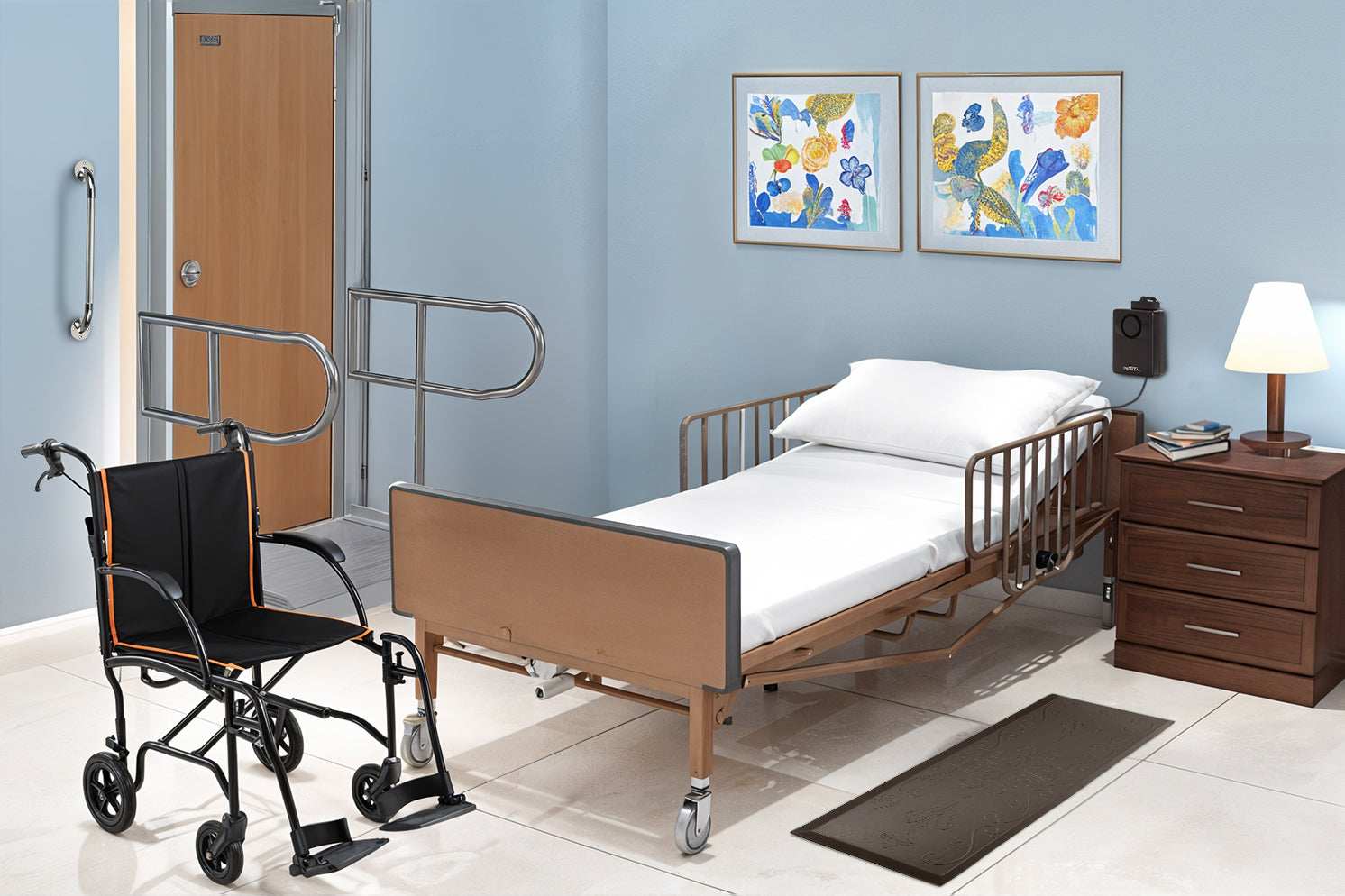
Standard beds may not provide the necessary support your loved one needs. Hospital beds are adjustable, allowing for easier transfers from the bed to a wheelchair or walker. They also have side rails that can prevent falls during the night. Hospital beds are designed for comfort and can reduce strain on caregivers when lifting or moving an individual.

Chairs for Every Occasion
Wheelchairs
A wheelchair is essential if your loved one has limited mobility. Ensure you have one that’s the right size and fit, with a cushioned seat for comfort. You may opt for a manual or electric model depending on your needs.

Bath Chairs
Bathrooms can be hazardous for those with mobility issues. Bath chairs allow your loved one to sit while they shower, reducing the risk of slipping and falling. Some chairs come with backrests and handles for added support.

Transport Chairs
Transport chairs are ideal for moving your loved one short distances—such as from one room to another or around the house. They’re lightweight, easy to maneuver, and foldable, making them perfect for tight spaces.

Lift Chairs
Lift chairs are a great option for elderly individuals who have difficulty standing up or sitting down. These chairs are equipped with motorized lifting mechanisms that gently tilt the chair forward to assist the person in standing up. Lift chairs come in various styles and can provide extra comfort, as well as independence when transitioning between standing and sitting.
Preventing Falls in the Home
Fall Mats for Extra Protection
Falls can be dangerous, especially for the elderly. Fall mats, placed next to the bed or in high-risk areas, provide extra cushioning and protection. These mats are designed to absorb impact, reducing the risk of injury should a fall occur.
Non-Slip Flooring
Another essential safety feature is non-slip flooring. Carpets, rugs, or floor surfaces should be secure and non-slip to prevent trips. If you have smooth flooring like tile or hardwood, consider adding anti-slip mats or even textured stickers in high-traffic areas.
Bathroom Accessibility Modifications

Grab Bars and Handrails
Bathrooms are one of the most common places for falls. Installing grab bars near the toilet, shower, and bathtub will provide extra support. These bars make it easier for your loved one to lower themselves onto the toilet or into the bath.

Raised Toilet Seats
Raised toilet seats can make sitting down and getting up easier for those with limited mobility. They reduce the distance between standing and sitting, relieving pressure on the knees and hips.
Accessible Showers
If your loved one has difficulty stepping over the edge of a traditional bathtub, an accessible or walk-in shower can be a better option. These showers feature low or no-threshold entrances, allowing easy access for individuals with mobility issues. Many accessible showers also include built-in seats, non-slip flooring, and grab bars for added safety and convenience. With hand-held showerheads, the person can bathe comfortably while seated, minimizing the risk of falls and increasing their independence during daily routines.
Emergency Alarms for Added Safety

Bed Alarms
One critical aspect of safety for your loved one is ensuring they have a way to call for help in case of an emergency. Bed alarms attach to the bed and let you know if something is wrong. There are also personal alarms, which can be worn as pendants or wristbands, and are equipped with a simple button that alerts caregivers or emergency services if assistance is needed. These devices provide peace of mind, knowing that help is just a push away in case of falls, health concerns, or other emergencies.
Home Security Alarms
In addition to personal alarms, installing home security alarms with motion detectors can provide extra safety. These systems can detect movement within the home, alerting caregivers if your loved one is up and moving at unusual times, such as late at night. Some systems can be integrated with cameras, providing real-time video for caregivers to monitor from another room or even remotely.
Other Key Modifications to Consider
Stairlifts
If your home has stairs and it's not possible to move your loved one to a ground-floor bedroom, a stairlift is an excellent solution. Stairlifts allow safe and comfortable navigation between floors without the physical strain of climbing stairs.
Lighting for Safety
Make sure your home is well-lit, especially in hallways, bathrooms, and other high-traffic areas. Consider adding motion-sensor lights, which automatically turn on when movement is detected, reducing the risk of falls in dimly lit areas.
Emergency Call System
Equipping your home with an emergency call system ensures that your loved one can quickly alert you if they need assistance. These systems can range from wearable devices to wall-mounted call buttons in key areas of the house.
The Benefits of Planning Ahead
Making accessibility modifications in advance will save you time and stress in the future. These changes not only improve the quality of life for your aging parent but also offer peace of mind, knowing they are in a safe, supportive environment.
Conclusion
When an elderly parent moves in, it's vital to create a space that caters to their needs without sacrificing their independence. From ramps and wall rails to hospital beds, alarms, and mobility aids, these modifications transform a regular house into a home that feels secure and welcoming. By taking the necessary steps, you ensure your loved one can live comfortably while maintaining their dignity and safety.
FAQs
- What is the most important modification for accessibility? The most critical modification depends on your loved one's specific needs, but installing ramps and widening doorways are often essential for wheelchair users.
- How can I make my bathroom safer for elderly parents? Installing grab bars, using non-slip mats, and adding a bath chair or walk-in tub are excellent ways to improve bathroom safety.
- Can I make my home accessible without making major structural changes? Yes, there are many small modifications, such as installing grab bars, fall mats, and non-slip flooring, that can improve accessibility without requiring major renovations.
- What are some quick fixes for improving home safety for elderly family members? Quick fixes include adding non-slip mats, securing rugs, improving lighting, and installing handrails and grab bars in high-risk areas like bathrooms and staircases.
- How can I make my home more wheelchair accessible? To make your home wheelchair accessible, you’ll need to consider widening doorways, installing ramps, removing obstacles, and ensuring countertops and cabinets are reachable from a seated position.


