

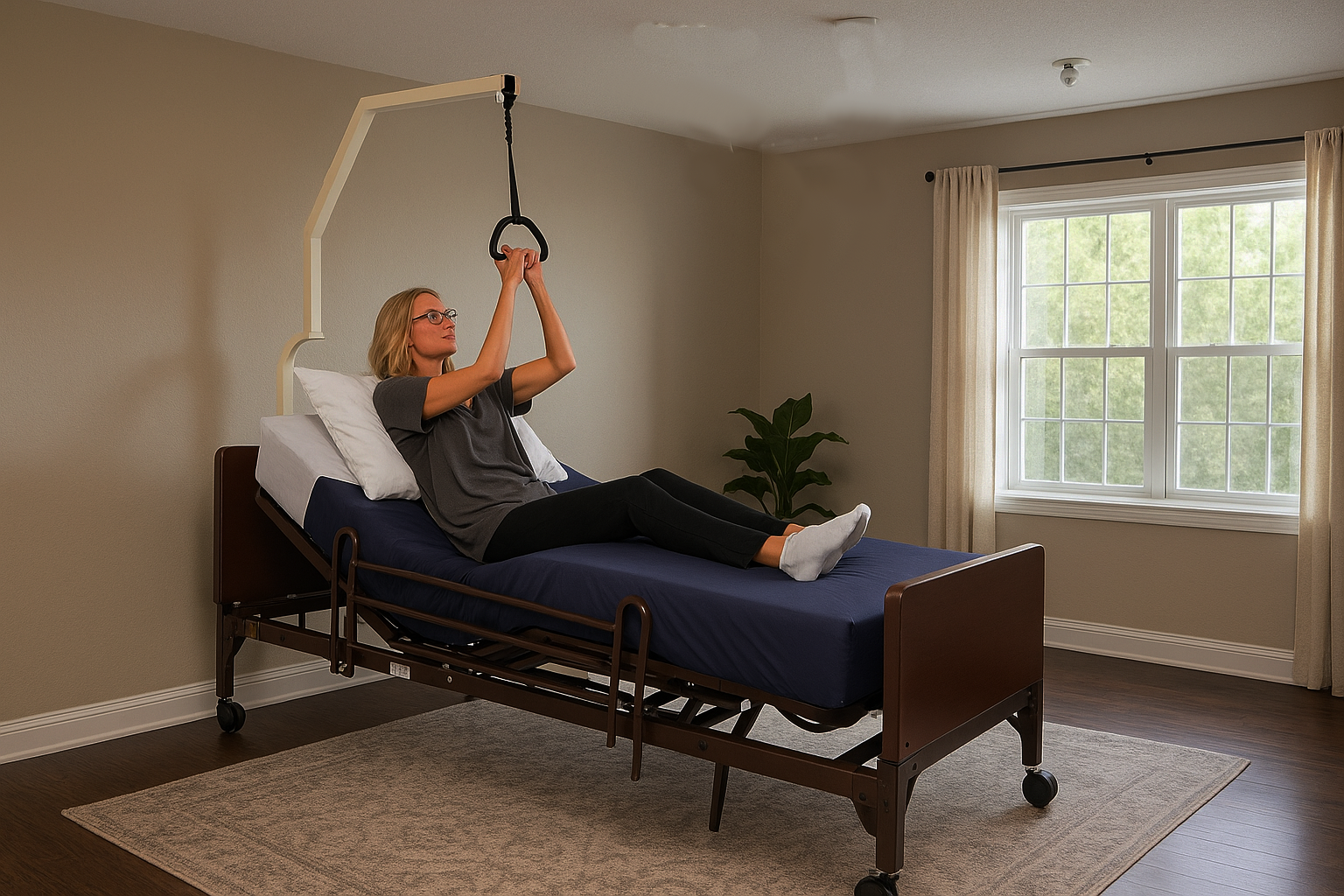
A well-maintained trapeze bar can provide years of safe, reliable support for individuals who rely on it to reposition in bed, assist with transfers, and reduce caregiver strain.
Regular upkeep not only helps prevent accidents but also ensures the bar remains comfortable and easy to use over time. Whether it’s daily checks, proper cleaning, or timely part replacements, consistent care is key to protecting both the user and the equipment.
This article explains:
- How to perform daily inspections to spot early signs of wear or damage
- The importance of securing and maintaining hardware components
- Proper cleaning techniques to prevent rust and slippage
- How to monitor and replace ropes for safe operation
- When to retire or replace a worn trapeze bar
- Best practices for safe storage and professional maintenance support
Conduct daily visual checks
One of the simplest yet most important maintenance steps is a quick daily inspection. Look for cracked paint, bent edges, loose parts, or any unusual wear. If your trapeze bar is foldable, check that the hinges or locking mechanism work properly.
This daily glance can help you catch minor issues, like paint chips or early signs of rust, before they compromise stability. Even sturdy steel or aluminum bars can weaken over time, so spotting problems early reduces the risk of accidents.
- Look for bent parts or cracked welds.
- Eye any loose bolts or misalignments.
- Confirm that folding bars lock securely if you have a foldable model.
If you aren’t sure how to handle minor anomalies, consult the user manual or reach out to the bar’s manufacturer. And if you notice a structural flaw that appears to be major, stop using the bar until a professional can assess it.
Zero in on hardware
Hardware maintenance is vital for a safe trapeze bar. Tighten nuts, bolts, and screws at regular intervals, especially on the supports or brackets.
Even Nyloc nuts, which are designed to stay tight, can lose grip over time. Replace them if you notice reduced tension.
During close-up checks, watch for:
- Bolts that spin too freely in their sockets
- Nuts with worn or stripped threads
- Screws that no longer tighten fully
Inspect for any deformation around joints. Warped or misshapen metal can indicate overloading or prolonged exposure to moisture. These are early warning signs that the bar’s structural integrity may be compromised.
If you’re unsure how often to do detailed checks, aim for a monthly inspection or after any major move. Regular maintenance ensures stability and prevents loosening over time.
For additional installation and stability guidance, see our trapeze bar home installation guide.
Clean properly
A clean trapeze bar is a more hygienic one, but there’s a right and wrong way to handle cleaning. Harsh chemicals can corrode metal or leave behind a slippery residue.
You don’t want your older adult gripping a bar that suddenly feels greasy. Instead, stick to mild soapy water, then wipe and dry thoroughly.
Why does drying matter so much? Over time, trapped moisture can lead to rust or pitting. Even strong materials like steel can weaken if left wet.
Proper maintenance not only prevents corrosion but also keeps the bar safe and functional for years. Here’s a simple cleaning routine:
- Wipe the bar with a soft cloth or sponge dipped in warm, soapy water.
- Rinse gently with clean water to remove any soap residue.
- Pat the entire bar dry with a towel. If you can, let it air-dry for a few minutes as well.
- Double-check areas where water might pool, like bolt holes or brackets.
Avoid bleach or heavy disinfectants unless recommended by the manufacturer. If your trapeze bar has a vinyl grip or padded sections, read the care guidelines. You may need specialty sprays or wipes that won’t break down the material.
Mind rope integrity
Some trapeze bars use rope sections to create a stable suspension, especially for adjustable height. If your model features ropes, it’s critical to monitor them for frays, loose threads, and discoloration. If you see tears, rips, burns, or unraveling, replace the rope immediately.
Many home-care trapeze bars use nylon or cotton ropes, sometimes with an internal Amsteel/Dyneema core for extra strength. Friction or sudden pulls can still wear them out faster than expected. If your rope has lost tension or the outer layer looks threadbare, act quickly.
- Inspect rope knots or connections each week.
- Check for lumps or uneven thickness, which can signal hidden internal damage.
- Replace the rope at the first sign of significant fraying.
Using a worn rope is risky. Keep an extra on hand if the manufacturer specifies a standard length or type.
Retire worn bars
Over time, any trapeze bar may be subject to enough wear and tear that it’s no longer reliable. You might see a noticeable bend in the bar, or maybe there’s a rust spot that just won’t go away. If the bar is deformed or heavily corroded, it’s time to retire it and get a new one.
That’s because even a small structural compromise can lead to a sudden failure under load. Remember, trapeze bars are not designed to support full body weight. They’re there to aid mobility and help someone shift or partially lift themselves.
Replacing a beloved piece of equipment might feel frustrating, but safety should come first. If you’re unsure how to find a new bar, check out our trapeze bar buying guide. It covers everything from materials to sizing.
Store with care
You may need to put your trapeze bar in storage when not in use, especially if you only bring it out for post-surgery recovery or short-term caregiving.
The way you store a trapeze bar can keep it in top shape. Foldable bars make this easier. They can be tucked into a closet or corner without taking up much space.
When storing your trapeze bar:
- Choose a dry, cool area that won’t foster rust or mold
- Keep it elevated off the floor to reduce contact with any moisture
- Wrap metal parts in breathable fabric or plastic if you’re storing them long term
If you have ropes or other detachable components, store them together so you don’t lose track of matching pieces.
Never store heavy items on top of the bar. You don’t want to risk bending or denting it. And if you’re moving the bar to a different location, lift it carefully and secure it properly in a vehicle.
A quick tip: if you find yourself frequently moving equipment, you might appreciate a foldable or portable model. It simplifies transportation and helps preserve the bar’s frame.
Seek professional help
Sometimes a trapeze bar needs more than basic maintenance. Maybe you found a suspicious crack near a critical joint, or the rope attachments seem wobbly no matter how often you adjust them.
When in doubt, call a professional. This could be a medical equipment specialist or an occupational therapist experienced with home mobility aids.
A professional can:
- Inspect your current trapeze bar setup for structural integrity
- Recommend replacements if the bar is past its prime
- Suggest safer installation options based on your loved one’s mobility
You can also check out local resources for seniors or talk to an occupational therapist about whether a trapeze bar is right for your situation.
If you’re balancing different home care options, our trapeze bar vs overhead lift comparison might help you figure out the best fit.
Finally, if you’re searching for a high-quality replacement or an additional setup for another room, browse the trapeze bar collection at Shop Home Med. You’ll find models for different bed types and care environments, all built with durability and safety in mind.
Key takeaways
- Perform quick visual checks daily. Minor damage can grow into major structural issues.
- Keep hardware secure by tightening loose nuts or bolts promptly.
- Use gentle cleaning solutions and dry thoroughly to prevent rust.
- Replace frayed or worn ropes right away to maintain safety.
- Retire bars with cracks, rust patches, or bending, and get a safe replacement.
- Call a professional if stability issues persist.
Regular maintenance builds trust between you and your trapeze bar. By making these steps a habit, you ensure it’s always stable, reliable, and ready to help.
Frequently Asked Questions
How often should I check for damage?
A quick daily visual inspection works best. Pair this with a monthly detailed check of all hardware and ropes to catch issues before they become safety risks.
Do I need special products to clean my trapeze bar?
In most cases, mild soap and water are sufficient. Avoid corrosive cleaners or harsh chemicals that could degrade metal or make the grip slippery.
What if my trapeze bar is slightly bent?
Even a slight bend can weaken the bar’s structure over time. For safety, replace any bar that’s deformed, rusted, or heavily worn.
Which trapeze bar is best for affordability and reliability?
Many caregivers choose the standard medical trapeze bar for bed mobility for its balance of durability, ease of setup, and reasonable price.
When should I store my trapeze bar?
If the bar isn’t in regular use, store it in a dry, cool area away from moisture. Keep it off the floor and avoid placing heavy items on top.


