

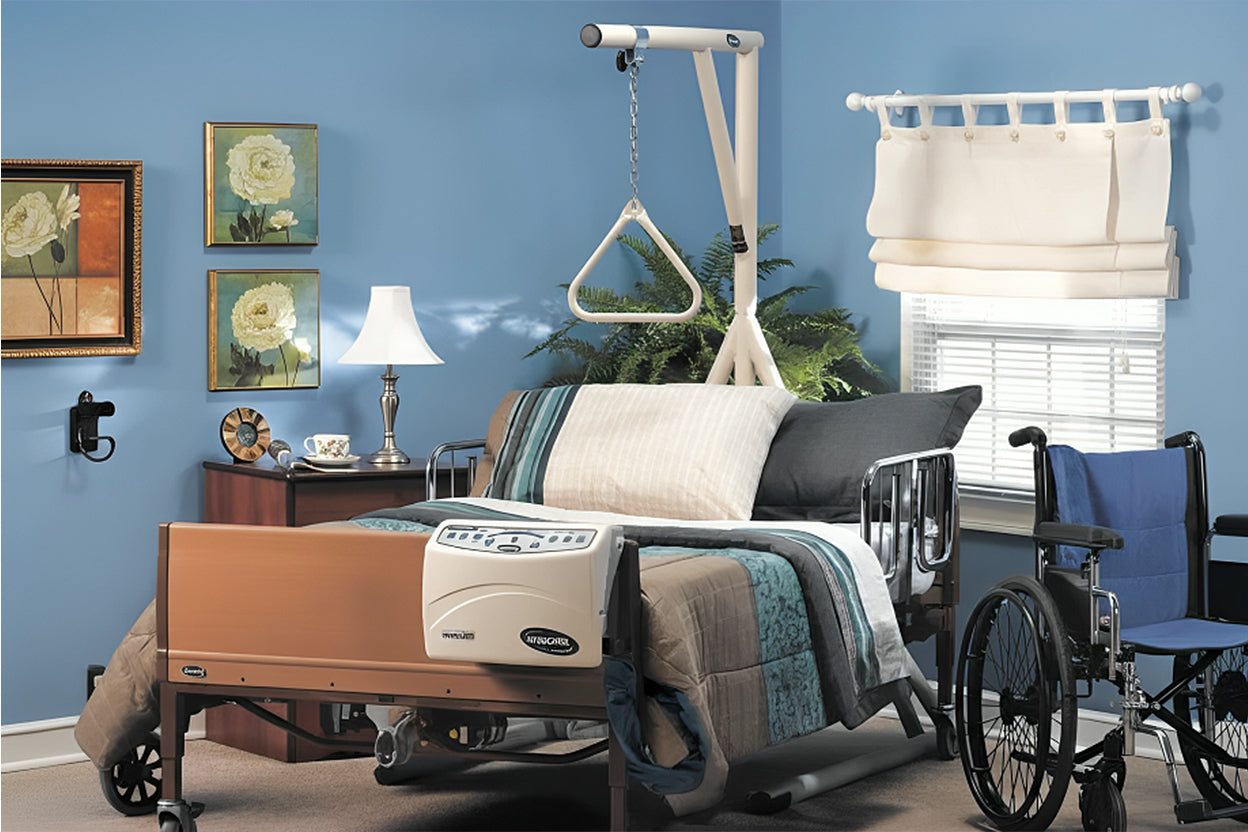
Bariatric trapeze bars help individuals with limited mobility move more independently in bed, reduce strain on caregivers, and promote safer transfers.
Designed with reinforced frames and high weight capacities, these bars provide a stable overhead grip for repositioning, sitting upright, or preparing to stand.
Many models support up to 1,000 pounds, making them essential for heavier users or anyone needing extra stability.
This article explains:
- Key benefits of bariatric trapeze bars for home use
- How to choose the right model and equipment setup
- Best practices for positioning and safe transfers
- Maintenance tips to ensure long-term safety and reliability
- How bariatric trapeze bars enhance caregiver ergonomics and reduce injury risk
Understand basic benefits
Bariatric trapeze bars allow users to shift or reposition in bed with minimal help, which supports independence and reduces caregiver strain. They’re especially valuable for people recovering from surgery, living with chronic conditions, or managing mobility limitations.
By gripping the overhead handle, users can relieve pressure on certain body areas, helping prevent bedsores and making nighttime adjustments easier.
Bariatric models are available in bed-mounted and freestanding designs:
- Bed-mounted units attach directly to a hospital or adjustable bed frame, keeping floors clear.
- Freestanding units have a stable base that can be positioned for optimal reach in various room layouts.
Many designs feature adjustable overhead booms or straps, which are helpful for people with arthritis or limited hand strength. For more on selecting a model that works with your bed setup, see our guide on trapeze bar compatibility with hospital beds.
Gather needed equipment
Choose a bariatric trapeze bar rated for the user’s weight capacity to ensure stability and safety. Heavy-duty models typically support 600–1,000 lb, offering the stability required for heavier users or situations where a caregiver assists with repositioning.
Check the chain or strap length to ensure the handle is within easy reach, avoiding shoulder strain.
Confirm bed compatibility before purchase:
- For heavier users, pairing the trapeze bar with a bariatric hospital bed provides reinforced frames and wider decks for greater stability.
- If bariatric support isn’t required, explore the full hospital bed collection to find adjustable and specialty options for different care environments.
For step-by-step buying advice, see our Trapeze Bar Buying Guide.
Choose the right location
Position the trapeze bar so the user can easily reach it from both lying and seated positions. Most people place it near the head of the bed for lifting and repositioning, while others prefer a midpoint position to help pivot the torso.
- Freestanding models require enough clearance for their base.
- Bed-mounted models save floor space but must be secured to a compatible bed frame.
Ensure the overhead strap or handle is within comfortable reach without twisting or overstretching. For safety, ensure the base rests on a solid floor or that the bed frame is firmly secured to handle the trapeze bar’s weight and movement.
For detailed setup instructions and safety considerations, see our Trapeze Bar Home Installation Guide.
Practice safe transfers
Safe transfers start with a stable setup. The user should hold the trapeze bar firmly and shift their weight gradually before swinging their legs over the side of the bed.
Many people benefit from caregiver assistance at first, but over time, the trapeze bar allows them to complete more of the movement independently.
Encourage slow, controlled motions, avoiding sudden jerks that can strain muscles, destabilize the bar, or cause slips.
A nearby chair can provide a safe landing point when transitioning directly from bed to a seated or standing position, reducing the risk of imbalance or falls. The trapeze bar can also support posture changes for activities like dressing or eating.
For more back safety strategies and lifting techniques, see our Reduce Caregiver Injury Risk with Trapeze Bars.
Basic transfer steps:
- Place feet on a stable surface.
- Grip the trapeze handle securely.
- Shift body weight forward.
- Pivot hips to swing legs over the edge.
- Stand or rest once both feet are planted.
Maintain and check often
Bariatric trapeze bars endure daily stress, so regular inspection is essential for safety and longevity. Before each use, gently pull on the bar to confirm stability.
Check for loose screws, bolts, or worn components, and inspect the chain or strap for fraying or damage. Replace immediately if issues appear.
Clean the handle area with mild soap and water to remove oils that could affect grip. Lubricate moving metal joints periodically to keep the bar operating smoothly and reduce wear. Use only the type of lubricant recommended by the manufacturer, and wipe away any excess to prevent drips on the floor that could cause slips.
For a complete checklist and preventative care steps, see our Trapeze Bar Maintenance Tips.
Common questions
Are bariatric trapeze bars compatible with hi-low hospital beds?
Yes. Many patients find that pairing a bariatric trapeze bar with a hi-low hospital bed makes repositioning and transfers much easier. The adjustable height feature of hi-low beds can reduce strain on both patients and caregivers. See our guide on combining trapeze bars with hi-low hospital beds.
What’s the difference between bariatric and standard trapeze bars?
Bariatric trapeze bars are built with reinforced frames, wider bases, and higher weight capacities (often 700–1,000 lbs) compared to standard models (~250 lbs). They offer extra stability for heavier users or those who need more robust support.
Will Medicare cover this device?
It depends on the plan. Check our trapeze bar Medicare coverage guide for details.
Can a bariatric trapeze bar be moved between rooms?
Yes. Freestanding models can be moved between rooms, but disassemble and reassemble them according to the manufacturer’s instructions, check all parts for wear, and test stability before use. Bed-mounted versions are less portable and must be reinstalled on a compatible bed frame.
Is trapeze bar sound after surgery?
Many post-surgery patients benefit from gentle support. Confirm with your doctor first. See our trapeze bar for post-surgery recovery guide.


